Monday, June 18, 2018

Vietnamese Pickled Vegetables (Do Chua)

Vietnamese pickled vegetables known as "đồ chua" in Vietnamese. These pickles are commonly made using a combination of carrots and daikons (white radishes). This type of pickles are generally added in Vietnamese cold cut sandwiches known as "bánh mì thịt". They are also used as a condiment for other Vietnamese dishes. When I make a batch I would make a few jars and without a recipe. They are quick and easy to make and can be eaten immediately. I like to wait roughly 12-24 hours to let the seasoned brine seep through. I store the pickles in a glass jar in the refrigerator up to several weeks.

Vietnamese pickled vegetables (đồ chua)

Vietnamese Pickled Vegetables (Đồ Chua)--makes about 1 1/2 cups

Ingredients:

2 medium-sized carrots, peeled, cut into 2-inch matchsticks
1 tsp salt
2/3 cup water
1/3 cup white vinegar
2-3 Tbsp white sugar

Method:

Prepare Carrots: Peel and cut the carrots into 2-inch matchsticks, sprinkle with salt and let them sit for about 10-15 minutes to help remove some access water. Wash in cold water and let everything drain.

Prepare Brine: Cook the water, vinegar and sugar in a small pot until the sugar dissolves. Gently simmer the liquid for about 2-3 minutes. Let it cool down completely.

Pickling Process: Place the prepared carrots in a glass jar or ceramic bowl. Pour the cooled brine over it. Seal the jar or bowl.

pickled carrots

pickled watermelon radishes

Vietnamese Pickled Vegetables (Đồ Chua)

Ingredients:

8 small watermelon radishes, ends trimmed, sliced
1 tsp salt
2/3 cup water
1/3 cup white vinegar
2 1/2 Tbsp white sugar

Method:

Prepare radishes: Trim the ends and slice thinly (about 1/8th-inch thickness), sprinkle with salt and let them sit for about 10-15 minutes to help remove some access water. Wash in cold water and let everything drain.

Prepare Brine: Cook the water, vinegar and sugar in a small pot until the sugar dissolves. Gently simmer the liquid for about 2-3 minutes. Let it cool down completely.

Pickling Process: Place the prepared radishes in a glass jar or ceramic bowl. Pour the cooled brine over it. Seal the jar or bowl.

Seasoned Black Bean Sauce (Nuoc Tuong)

When we lived in Vietnam decades ago my mother made nước tương or seasoned black bean sauce to drizzle over her bánh mì or Vietnamese sandwiches to sell. Nowadays she continues to make this sauce to use as a condiment for some of our meals. It generally tastes a little on the sweet side. If you prefer a thicker sauce then use only 2 tablespoons water for this recipe. You can find "Ground Black Bean Sauce" sold in a glass jar or a can at an Asian market. The store-bought sauce is very salty by itself.

We also use this same sauce by adding a few more ingredients such as a squeeze of lemon or lime juice, freshly crushed roasted unsalted peanuts and hot chili peppers to dip our gỏi cuốn or fresh spring rolls. This sauce keeps up to a month if tightly sealed in the refrigerator. Always use a clean spoon every time you remove the sauce to prevent contamination inside the jar.

seasoned black bean sauce (nuoc tuong)

Seasoned Black Bean Sauce (Nước Tương)--makes about 1/2 cup

Ingredients:

2 tsp vegetable oil
1 large garlic clove, minced (about 1 tsp minced garlic)
2 Tbsp Ground Black Bean Sauce
4 Tbsp water
2 Tbsp sugar
1 green blade of scallions, chopped (about 1 tsp chopped)

Method:

Saute garlic in oil until light golden. Add Ground Black Bean Sauce, water, sugar and scallions. Cook in medium-low heat for about 5 minutes.

seasoned black bean sauce (nước tương)

Sunday, June 17, 2018

How to Prepare Soft-Shell Green Crab for Eating

As a nurse practitioner, if someone comes to the clinic telling me he/she was given crabs I would be concerned. However, when a scientist texts me that I can have crabs I am rushing over to get them! Dr. Gabriela Bradt recently had 5 crabs molt in her lab, making me a very happy recipient of them! 

Anytime you have access to any types of soft-shell crabs you can wash them in cold water and cook them as they are, or you can spend a little time to prepare them for a more pleasing presentation and better taste. These soft-shell green crabs are no different. Plan on eating these crabs as soon as you prepared them so they will be fresh. According to Dr. Bradt these soft-shell crabs will stay soft once out of the water and refrigerated. At the conference some people mentioned that these green crabs are tough, living up to 7-12 days in the refrigerator without any food or water! Although I heard this echoed from several scientists I am not going to conduct my own longevity study on my precious soft-shell crabs! From my observation they may have meant only the hard-shell crabs as they are much stronger than the soft-shell ones. When Dr. Bradt gave me the 5 crabs, even though soft-shells, she separated each one in its own container. The stronger and bigger green crabs will eat the weaker ones. If you lack space or containers you may keep equal softness crabs together. Place 1-2 damp paper towels or fresh seaweed in each container to keep the crabs moist. 

The process of cleaning crabs is quick and simple, this is my preferred way.

keep the crabs in separate containers if possible
place damp towels in each container to keep the crab(s) moist


How to Prepare Soft-Shell Green Crab for Eating

Wash the crabs in cold water. Use scissors to trim off just enough of the face, this includes the spines between the eyes, eye stalks, antennae, and antennules. These crabs are smaller than other crabs so be gentle and try not to trim too much off. One key point to remember is what you have left is what you will get to eat! Trim off the ends (pointy parts) of the 4 pairs of the legs and the apron (the V-shaped flap) that opens up on the stomach and mouth parts. Gently lift each side of the carapace (dorsal aspect or top of the crab) and trim off the gills. Rub a little salt on the crabs, rinse them with cold water to thoroughly clean them and place them in a strainer to be used.

dorsal view: trim off the marked area with scissors
(face, pointy ends of the legs)

ventral view: trim off the marked areas with scissors
(mouth parts, apron, pointy ends of the legs)
trim off the face
trim off the pointy ends of  the legs
ventral view (belly)
open up the apron and trim at the base
trimmed apron
trim off the mouth parts
the arrows show where to lift up to remove the gills
lift each side of the carapace and trim off the gills
trimmed soft-shell crabs

Monday, June 11, 2018

Green Crab Golden Pate

The green crab population is exploding in New England, all the way up to coastal Canada. I believe this is not publicly known. If people knew that they could be easily trapped or harvested and eaten, then I am convinced it will certainly make a dent in their population. Only recently I have learned about them. I am sure there are people like me who have an interest and find great pleasure in feasting on pests or invasive species--does not matter if they walk, hop, crawl, slither, swim, jump or fly!

In June 2016 I started to harvest, cook and eat these green crabs. Sadly for me my harvests were few. I often did not venture out specifically to search for them. I generally go out at low tide along the coast (of New Hampshire) to harvest periwinkles and sea vegetables (or seaweed). When I turn over rocks or seaweed I would be lucky to find a few small ones to take home. The ones I found so far had relatively soft shells so I was able to fry up the entire crabs and eat them whole. The first time I found 3 crabs I made crispy fried green crabs on a bed of simple relish. It was tasty but the meal was too small--not enough to feed even a small child.
 

I recently attended a 2-day "Green Crab Working Summit 2018" held in Portland, Maine as a consumer. The conference was excellent--full of practical information and education. I did not think I would blog again but the summit was motivating and inspiring--made me realize that I should definitely eat more green crabs and promote others to eat them too! As I plan to eat and cook them regularly I would like to put my ideas and recipes in writing--to personally document my food. One of my brothers asked me how many recipes can I come up with for green crabs? I honestly do not know the answer but what I know is that the more crabs that are accessible to me the more cooking, creating and eating I will do in my kitchen!

I met many wonderful people at the summit including Jamie Bassett, owner of Green Crab Nation (volume supplier of green crab) who gave me a large bag of boiled female green crabs and a pound bag of already picked green crab roe. I must say I was thrilled and grateful to receive them. Jamie warned me that the bag of roe was previously frozen and thawed so it needed to be eaten within a day. I rushed home and immediately made this pate with the roe. The ingredients used in this recipe are similar to the monkfish liver pate that I made a few years ago. Initially I used 1/3 cup of heavy cream but then added a total of 3/4 cup to this pate to make it more moist. The final result is tasty, not as briny as the monkfish liver pate. I called this "golden" for the color and because the roe is as precious as gold. If you have to hand pick the roe from these 2-3 inch crabs yourself you will quickly understand how labor intensive it can be.

We definitely need to work together, and spread the word to the public that eating green crabs is a delicious and nutritious way to help save our coast, including our local soft-shell bivalves, crustaceans, eelgrass and salt marshes.

I encourage you to eat more green crabs!


Green Crab Golden Pâté (makes about 3 cups)

Ingredients:

1 beef marrow bone (about 15 oz) or about 1/3 cup partially cooked marrow
1 Tbsp canola oil (may use another vegetable oil of your choice)
1 shallot, finely minced (about 1/3 cup)
4 garlic cloves, grated (about 1 Tbsp)
About 1/2 thumb sized fresh ginger, grated (about 2 tsp)
2 green onions, green parts only, chopped (about 1/3 cup)
1 lb cooked green crab roe, removed and discarded any non-roe parts
2 Tbsp sake
3/4 cup heavy cream
1 Tbsp fish sauce (nước mắm)
1/2 tsp sugar
1/4 tsp freshly roasted and ground white pepper

Method:

Place the beef bone marrow in a small pot, add enough water to just submerge the bone. Boil for about 5-7 minutes (depending on the size of the bone) or until the marrow can easily be removed from the bone. Use a chopstick to poke the marrow, if it goes through then you will have no trouble removing it. Remove the marrow once it is cool enough to handle and set aside.

If you are using whole white peppercorns, roast them in a pan over medium high heat for about a minute to enhance the flavor. Grind or crush the peppercorns once cooled and set aside. I have a small coffee grinder that I use strictly for herbs and spices.

In a medium-sized pan heat oil and marrow in medium-high heat. Saute shallot about a minute or until it is soft. Add garlic, ginger, and green onions and saute about a minute, avoid burning the garlic. Add roe, wine, and heavy cream. Adjust heat as needed during cooking. Cook for about 5 minutes to cook off the wine and to reduce some of the liquid. Season with fish sauce, sugar and ground pepper and cook for about another minute. Once the contents cool slightly pour everything into a food processor and pulse 4-5 times. May use the pate immediately, seal and keep in the refrigerator for up to 5 days or in a sealed container in a freezer for up to a month.

How to use this Green Crab Golden Pâté

There are many ways to use this Green Crab Golden Pâté--let your imagination and hunger guide you. I post a few photos to show that you can make simple delicious appetizers or snacks with just the spread of the pate or you can use it as a base or part of a base. For the appetizers (pictured below) I use ingredients that I have available in my kitchen and deck--smoked salmon, tomatoes, marinated anchovies in oil, pickled Chinese onions, capers, grated lime zests, dill, mint, chives and chive flowers.

1 pound of already picked green crab roe
ingredients for making green crab golden pâté
pick out and discard the non-crab roe parts
whenever you see them during cooking
saute the pâté
cook off the wine and reduce some of the liquid
give a few pulses in a food processor to blend
be sure to remove all the delicious pâté


Addendum:
After making this pâté I realized a pound of roe is quite unrealistic to obtain for most people. The recipe below has been adjusted to about 4 ounce of green crab roe.

Green Crab Golden Pâté (makes about 3/4 cup)

Ingredients:

2 Tbsp beef marrow
1 tsp oil
1  Tbsp minced shallot or onion
2 Tbsp finely chopped green parts of scallion
1 tsp grated fresh garlic
1/4 tsp grated fresh ginger
4 oz cooked green crab roe, removed and discarded any non-roe parts
1 tsp sake (may also use drinking white wine or sherry)
2 Tbsp milk (may also use heavy cream, half and half)
1 tsp fish sauce (nước mắm)--preferably the Three Crabs brand or another good fish sauce brand)
A pinch of sugar
A pinch of ground white pepper

Method:

Place the beef bone marrow in a small pot, add enough water to just submerge the bone. Boil for about 5-7 minutes (depending on the size of the bone) or until the marrow can easily be removed from the bone. Use a chopstick to poke the marrow, if it goes through then you will have no trouble removing it. Remove the marrow once it is cool enough to handle and set aside.

If you are using whole white peppercorns, roast them in a pan over medium high heat for about a minute to enhance the flavor. Grind or crush the peppercorns once cooled and set aside. I have a small coffee grinder that I use strictly for herbs and spices.

In a medium-sized pan heat marrow and oil over medium-high heat. Saute shallot or onion, green scallions, garlic, and ginger about a minute or until the shallot or onion is soft, avoid burning the garlic. Add roe, wine, and milk. Adjust heat as needed during cooking. Season with fish sauce, sugar and ground pepper. Cook for about 4-5 minutes to cook off the wine and to reduce some of the liquid. Once the contents cool slightly pour everything into a food processor and pulse 4-5 times. May use the pate immediately, seal and keep in the refrigerator for up to 5 days or in a sealed container in a freezer for up to a month.

Sunday, June 10, 2018

Introduction to Green Crab

green crab
Introduction to Green Crab

Why should we care about these tiny green crabs? As you read the introduction below, you will understand. This was taken directly from the "Green Crab Working Summit 2018" in Portland, Maine, written by scientist/researcher Dr. Gabriela Bradt, an expert on green crab. She gave permission to reprint this introduction in my blog.   

I encourage you to eat more green crab!

Thanh Thai (greencrabcafe@gmail.com)
Green Crab Cafe blog author
Green crab recipe developer
Green crab photographer
Green crab eating enthusiast

Green Crab Working Summit 2018

The East Coast wave of the green crab invasion occurred 200 years ago and they have since firmly established themselves from New England to Prince Edward Island, Canada, wrecking ecological and economic havoc along the way. We are not the first to research and propose solutions to reign in these nuisance crustaceans, in fact some of the ideas and work being presented and discussed over the next several days have been proposed or attempted in the past. However, in the years since people have been investigating this problem, not one, long-term, lucrative, eco-beneficial and viable mitigation/control plan has actually been truly successful at achieving this. There are many reasons for this, including lack of funding, processing capabilities, technology, and perseverance. Green crabs are successful invaders because they possess many biological and physiological properties that allow them to exploit diverse habitats, withstand broad ranges of temperature and salinity, as well as the ability to survive out of water and without eating for extensive periods. Along with few natural predators and high fecundity, green crabs are very likely the 'model' invasive species that have gone unchecked for too long.

However, the time to finally get a handle on this invasive crustacean appears to have arrived. The combination of warming ocean temperatures, increasing regulations on wild harvest fisheries, fish populations at historically low levels, as well as continued demand for fresh, local seafood and continued devastation of shellfish fisheries and estuarine and coastal habitats by these crustaceans, has lead to the perfect confluence of factors driving the need for population control while also developing diverse uses and markets for this nutritious and abundant crab that happens to be an invasive species. Controlling green crabs populations has the potential to positively impact shellfish fisheries through reduced predation, create new economic opportunity for fishermen, bring a new, local and abundant seafood product to the region, AND restore biodiversity and critical estuarine, marsh and coastal ecosystems. The possible uses and products from green crabs that have high market potential are many, and their development and manufacture are critical. The time to develop and investigate in these products is now, and it is why we decided to put together this summit. We want to bring all stakeholders to the table and see what we can learn from each other that will be helpful, feasible and ultimately successful in mitigating this nuisance species.

Let's use our broad and vast experience to explore, develop and expand markets, biocontrol methods and the potential of a green crab "Fishery".

LET'S DO THIS!

Dr. Gabriela Bradt
Co-lead of Green Crab Working Summit 2018
New Hampshire Sea Grant and UNH Cooperative Extension
gabriela.bradt@unh.edu
University of New Hampshire
8 College Road
Durham, NH 03824

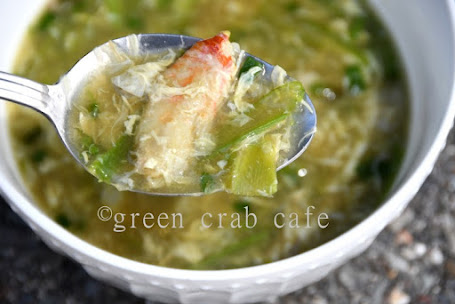
Vietnamese Crab and Asparagus Soup (Sup Mang Cua)

Apparently Vietnamese crab and asparagus soup (súp măng cua) is a popular soup eaten on special occasions such as wedding banquets in Vietna...